What a Custom Dining Table Costs, and Why
Published October 8, 2026
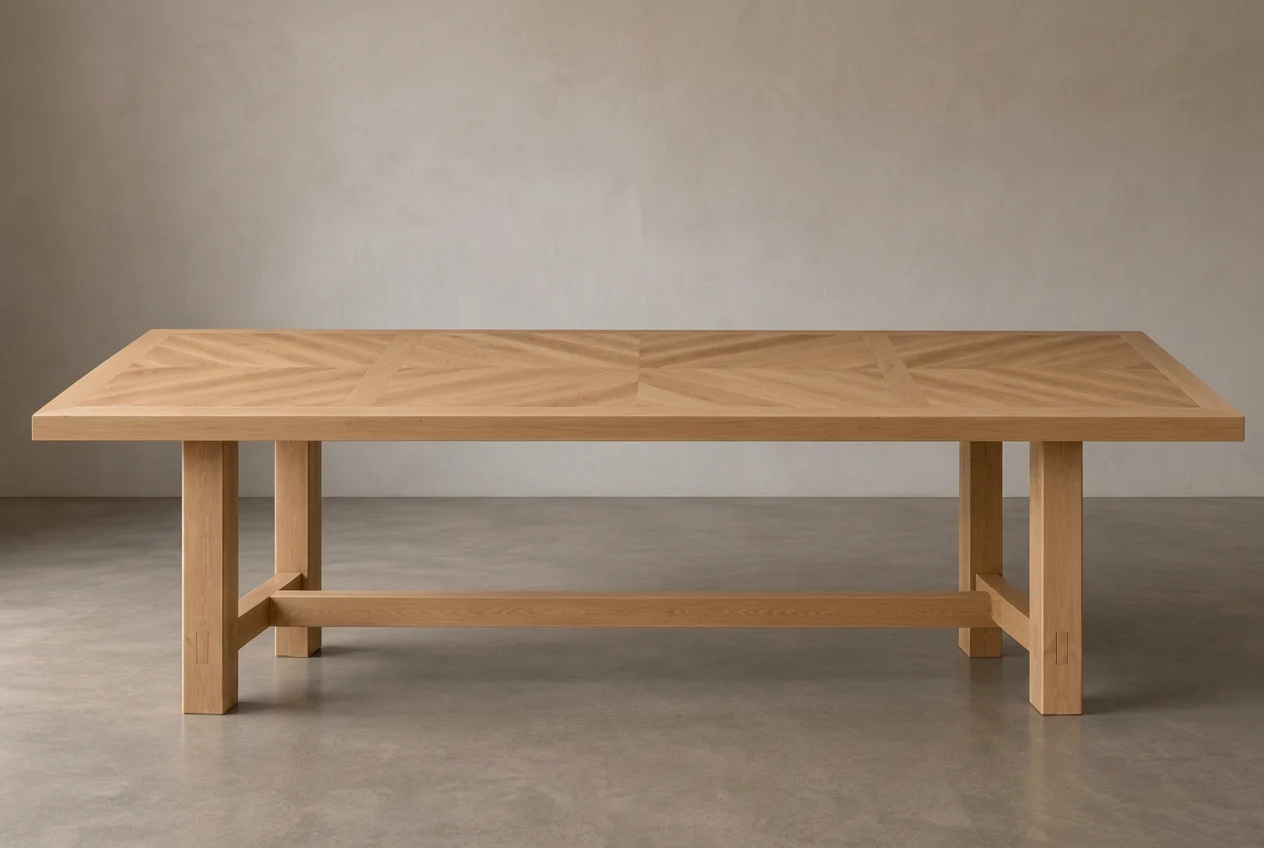
"How much does a custom dining table cost?" is usually the first question people ask, and it's a fair one. The honest answer is that it depends on what you're building. A 54-inch round and a 12-foot table for a big family are very different projects, and so are a simple four-leg base and a sculptural steel one. Groundwork has built custom dining tables by hand in Philadelphia since 1993. This guide walks through what actually drives the price, so you can walk into a quote knowing what you're paying for and where you have room to adjust.
What you're paying for with "custom"
A custom table is designed and built for one client, to exact measurements, rather than produced in volume to a fixed size. At Groundwork, that means skilled local artisans in southeastern Pennsylvania build each piece by hand, using Pennsylvania hardwoods, reclaimed lumber from regional salvage yards, and specialty materials like zinc from trusted suppliers. Whatever you pay goes to the materials you chose and the hours it takes to build one table well.
1. Size
Size is the most obvious driver, and it compounds. A longer, wider top needs more material. It also needs more labor: more joints to glue up, more surface to flatten and finish, and more handling.[1][2] Very long tables often need more than one base. Our 108-inch racetrack oval zinc table, for example, sits on three sculptural white oak bases. Big tables can also take more planning and more people to deliver.[2]
If you're watching budget: size the table to how you actually live. A few inches you don't need cost real money; a few inches you do need are worth it.
2. The top: wood species, reclaimed wood or zinc
The top is usually the biggest single material decision.
- Hardwood species vary in price. Black walnut, for example, is considered a premium domestic hardwood, with prices in the high range for domestic species.[3] We work with walnut, cherry, white oak and maple, all sourced from Pennsylvania mills whenever possible.
- Reclaimed wood takes extra work before it's usable. Salvaged beams and boards have to be de-nailed, checked for metal, dried and milled.[4][5] That can make reclaimed wood cost more than new lumber, but not always. Depending on the species and condition, it can come out close to the price of new wood.[5] Ours comes from barn beams, factory floors and architectural salvage.
- Live edge slabs and large continuous pieces tend to cost more, because wide, well-figured slabs are harder to find.[2]
- Patterned tops such as herringbone or hand-laid parquet involve many more pieces and joints, and matched grain takes extra time.[2]
- Zinc is a different material and a different craft. A Groundwork zinc top is hand-wrapped, and our network includes metal fabricators as well as woodworkers.
3. The base
Bases range from simple to sculptural, and labor follows. A straightforward four-leg base generally takes fewer hours than a trestle or pedestal with stretchers, and turned, tapered or sculptural details add more.[1] A custom-fabricated steel base or a highly sculptural design is a different build from a simple wood base.[2]
At Groundwork, the range runs from four-leg, trestle, pedestal and X bases in wood to steel bases fabricated from flat and angle stock or laser-cut sheet steel, plus our sculptural root-style bases. Explore them on our custom dining tables page.
4. The finish
Finishing is where many of the hours go that you never see. More coats, more steps or more specialized finishes add time.[1][2] Some woods need very little help: walnut needs nothing more than a clear matte finish. Others invite more work, like stained, whitewashed or cerused oak. Painted bases can be any color, and steel can be left natural with wax or powder-coated in any of hundreds of colors.
5. Delivery
A large, heavy table needs careful transport, enough hands to carry it, and a plan for stairs, doorways and tight turns.[2] Groundwork arranges white-glove delivery: your table is carefully transported, brought into your home and placed exactly where you want it.
How Groundwork prices a table
Because every table is made to order, there's no one-size price tag. Here's how pricing works with us:
- You share your idea: a table from our gallery, a photo, a magazine clipping or a sketch.
- We respond with some thoughts of our own and a sense of pricing, to get your input before the details are final.
- After a little back and forth, we send an order form with the price and lead time, so you know exactly what to expect.
What to send for an accurate quote
You'll get a faster, more accurate number if you include:
- Length, width and height (our quote form asks for all three)
- Shape: rectangular, square, round, elliptical oval or racetrack oval
- Top: zinc, reclaimed wood, or a hardwood like walnut, white oak, cherry or maple
- Base style, plus any finish or color ideas
- A photo of a table you like, from our gallery or anywhere else
Ways to shape the budget
If the first number is higher than you hoped, these are the usual levers. They're general guidance, and we're happy to talk through them:
- Adjust the size, especially length
- Consider a different wood species
- Choose a simpler base design
- Keep the finish straightforward
Get a real number
Tell us your dimensions and the materials you like. We'll get back to you within 2 business days with questions and a custom quote.
Get a QuotePrefer to talk? Call 215.790.0144 or email sales@groundworkhome.com.
Frequently asked questions
How much does a custom dining table cost?
It depends on the size, the top material, the base, the finish and delivery. Two tables can both be called custom and be priced very differently. At Groundwork, every table is quoted individually. Send us your size and the materials you like, and we'll reply within 2 business days with questions and a custom quote.
Why does a custom dining table cost more than a store-bought one?
A custom table is designed and built for one client, by hand, to exact measurements, rather than produced in volume to a fixed size. You're paying for the materials you chose and the skilled hours that go into building one table at a time.
Is walnut more expensive than other woods?
Generally, yes. Black walnut is considered a premium domestic hardwood, with prices in the high range for domestic species. The exact difference on a finished table depends on its size and design.
Does reclaimed wood cost more than new wood?
Often, but not always. Reclaimed lumber has to be de-nailed, checked for metal, dried and milled before it can be used, which adds cost. Depending on the species and condition, though, reclaimed wood can end up close in price to new lumber.
What do I need to get an accurate quote?
Your rough length, width and height, the shape, the top material you like (zinc, reclaimed wood or a hardwood such as walnut, white oak, cherry or maple), the base style and any finish ideas. A photo of a table you like, from our gallery or anywhere else, helps too.
Keep exploring
- Zinc Top Dining Tables: 16 zinc tables we've built, on steel, wood and root bases
- Custom Dining Tables: every size, shape, top and base we build
- Walnut Dining Tables: solid walnut with a clear matte finish
- How to Care for a Zinc Table
- Materials & Finishes · The Process
Sources
- 1. Custom Wood Quote, Custom Dining Table Cost: 2026 Pricing Guide for Woodworkers (labor scales with length; base styles by build hours; finish steps add time). https://customwoodquote.com/custom-dining-table-cost/
- 2. Jeff Mack Designs, How Much Does a Custom Dining Table Cost? (drivers: size, species and slab, live edge, base fabrication, finish, delivery logistics; thicker tops, specialty bases and matched grain add cost). https://www.jeffmackdesigns.com/pages/how-much-does-a-custom-dining-table-cost
- 3. The Wood Database, Black Walnut ("Considered a premium domestic hardwood, prices are in the high range for a domestic species"; "walnut is rarely stained"). https://www.wood-database.com/black-walnut/
- 4. E.T. Moore, Why Is Reclaimed Wood So Expensive? (salvage, hand de-nailing, grading, drying). https://etmoore.com/news/why-is-reclaimed-wood-so-expensive/
- 5. Philadelphia Lumber Co., Lumber Pricing Guide (reclaimed pricing reflects salvage labor, rarity, condition and milling; their worked example shows processed reclaimed white oak within about 3% of new). https://www.philadelphia-lumber.com/pricing