How to Care for a Zinc Table
Published October 8, 2026
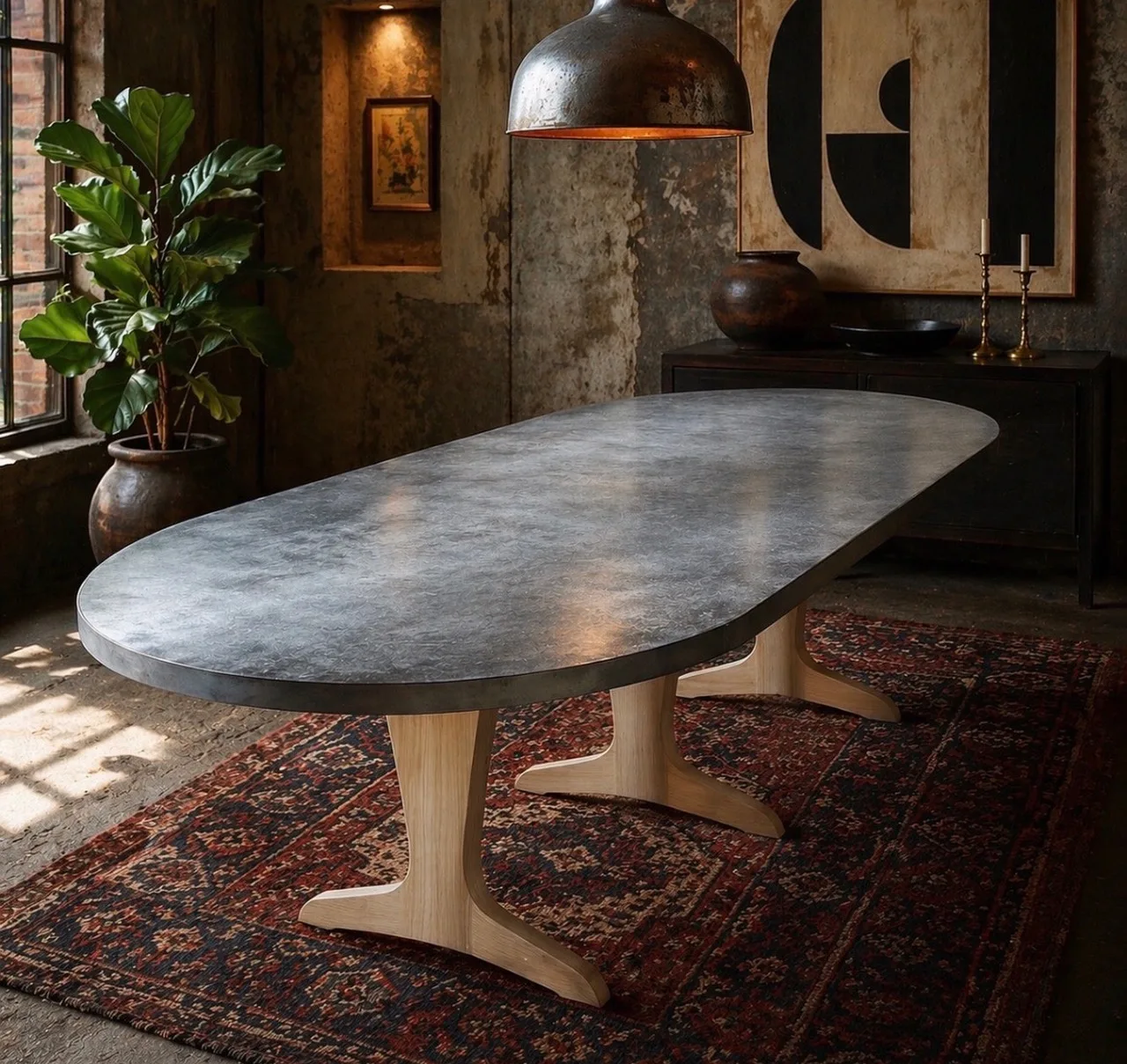
A zinc table isn't supposed to stay the way it looked on delivery day. That's the whole appeal. At Groundwork, zinc is one of our most requested finishes, and the way we see it, a zinc top is the opposite of precious. Water rings, scratches and the marks of daily life become part of the story. Still, a little know-how goes a long way. Here's what's actually happening on the surface of your table, how to clean it, what to keep off it, and why an occasional coat of paste wax is about all it asks for.
Why zinc changes color: the patina, explained
Zinc is a reactive metal. When fresh zinc meets air and moisture, it first forms zinc oxide and zinc hydroxide. Over time, carbon dioxide in the air turns those into zinc carbonate, a stable, matte gray layer usually called the patina.[1][2] That layer builds up through repeated cycles of moisture and drying.[2] Add everyday life (spills, plates, hands, wiped-down glasses) and every table ends up with a pattern all its own.[4]
Two things are worth knowing:
- The patina is part of the protection. Industry and research sources describe the carbonate layer as a barrier that slows further corrosion of the zinc beneath it.[1][3]
- It never really stops. The patina keeps evolving for the life of the table, and every top develops its own pattern based on how it's used.[4]
That's what we mean on our Materials page when we call zinc a "living patina that deepens with every use."
Everyday cleaning
Zinc care is refreshingly simple:
- Wipe with a soft cloth and warm water. For anything stickier, add a little mild dish soap.[4][5][6]
- Wipe up spills promptly, especially anything acidic (more on that below).[4][5]
- Dry the surface. Standing water and moisture trapped under things like rubber mats can leave white, powdery spots or rings.[5][6]
That's it. You don't need special zinc cleaners for day-to-day care.
What to keep off a zinc top
Zinc fabricators agree on a short list:[4][5][6]
- Acids left sitting on the surface. Lemon and lime juice, vinegar, citrus and tomato-based foods lift the patina and leave a lighter, brighter spot. The spot usually darkens again as the patina re-forms, though in a slightly different pattern.[4][5]
- Harsh cleaners. Avoid bleach, ammonia and citrus-based or acidic cleaning products. Bleach in particular reacts strongly with zinc and can leave marks.[4][5]
- Abrasive scrubbers for routine cleaning. They can strip the patina you've built up.[6]
- Hot pans and knives. Use trivets and cutting boards. Zinc is a relatively soft metal and shows scratches.[5][6]
- Trapped moisture. Avoid rubber-backed mats or anything that holds water against the surface.[5]
None of these will ruin a zinc table. They'll just change how it looks, and with zinc, that's often the point.
Paste wax: the one bit of maintenance
Groundwork's advice, straight from our Materials page: the occasional addition of a coat of paste wax adds depth to the finish as well as additional protection. Over time, the buildup of wax and patina gives the zinc the look of an old French bar top.
As a general rule, a layer of wax also puts a light barrier between the zinc and daily use, which slows down how quickly new marks appear.[6]
Water rings, scratches and "Is this normal?"
Yes, it's normal. The first glass ring on a new zinc table often looks like a blemish. Give it time. As more marks and patina build up, they tend to flow together into an even, mottled surface that reflects how your family uses the table.[6] Heavily used spots often end up a little smoother and lighter than the rest.[7]
If you ever want a fresher look, zinc can generally be brightened by careful sanding or buffing, which resets the surface to a lighter gray before the patina starts again.[4][6] That's a bigger step, and it changes the finish, so talk to us first.
A quick zinc care cheat sheet
| Do | Don't |
|---|---|
| Wipe with warm water and a little mild dish soap | Use bleach, ammonia or acidic cleaners |
| Wipe up citrus, vinegar and tomato spills promptly | Leave acidic food or drinks sitting on the top |
| Use trivets and cutting boards | Set hot pans or cut directly on the zinc |
| Dry standing water | Leave rubber mats or wet items on the surface |
| Add an occasional coat of paste wax | Scrub with abrasive pads for routine cleaning |
| Let the patina do its thing | Panic over the first ring |
Thinking about a zinc table?
Every Groundwork zinc table is hand-wrapped and built to order in the size, shape and base you choose. Browse the zinc tables we've built, then tell us what you have in mind. We'll get back to you within 2 business days with questions and a custom quote.
Inquire About a Zinc TablePrefer to talk? Call 215.790.0144 or email sales@groundworkhome.com.
Frequently asked questions
Is the patina on a zinc table damage?
No. The patina is a thin, matte gray layer that forms naturally as zinc reacts with air and moisture. It's the character people choose zinc for, and it's part of what slows further change in the metal.
Can I clean a zinc table with vinegar or lemon?
We don't recommend it for everyday cleaning. Acids lift the patina and leave lighter, brighter spots. Warm water and a little mild dish soap on a soft cloth are all a zinc top needs day to day.
Will water rings on zinc go away?
Rings and marks are part of how zinc ages. As the patina builds over time, individual marks tend to blend into the overall surface. At Groundwork we think of them as part of the table's story.
How often should I wax a zinc table?
Groundwork recommends an occasional coat of paste wax. It adds depth to the finish and some extra protection, and over time the buildup of wax and patina gives the zinc the look of an old French bar top.
Can I put hot dishes on a zinc table?
Use trivets and hot pads. Zinc fabricators generally advise against placing hot pans directly on zinc surfaces.
Keep exploring
- Zinc Top Dining Tables: 16 zinc tables we've built, on steel, wood and root bases
- Custom Dining Tables: every size, shape, top and base we build
- Walnut Dining Tables: solid walnut with a clear matte finish
- Materials & Finishes · The Process
Sources
- 1. Hot Dip Galvanizers Association Southern Africa, Information Sheet No. 11: How Zinc Protects (zinc oxide → hydroxide → stable, insoluble, matte-gray zinc carbonate "barrier" layer). https://www.hdgasa.org.za/wp-content/uploads/2015/12/HDGA-Information-Sheet-No11-How-Zinc-Protects.pdf
- 2. Formation of corrosion products on zinc in wet supercritical and subcritical CO₂: in-situ spectroscopic study, Corrosion Science (ScienceDirect). Covers zinc carbonates forming from oxide and hydroxide via dissolved CO₂, and wet-dry cycling improving the carbonate layer. https://www.sciencedirect.com/science/article/pii/S0010938X20308994
- 3. Long-term atmospheric corrosion of zinc, Corrosion Science (ScienceDirect). Covers the adherent corrosion-product film becoming denser and more protective with exposure. https://www.sciencedirect.com/science/article/abs/pii/S0010938X06002599
- 4. Brooks Custom, Zinc Care and Maintenance (mild soap or glass cleaner for daily cleaning; acids remove patina; bleach reacts strongly; patina returns in a different pattern; sanding resets the finish). https://brookscustom.com/care_and_maintenance/zinc-care-and-maintenance/
- 5. La Bastille, How to Care for Your Zinc Countertops (mild soap and water; avoid leaving lemon, lime or orange juice; avoid bleach and ammonia; trivets and cutting boards; no rubber mats, which trap moisture). https://labastille.com/how-to-care-for-your-zinc-countertop/
- 6. Custom Metal Home, Care and Maintenance: Zinc Countertops (PDF). Covers dish soap cleaning, avoiding harsh, acidic and abrasive products, wax slowing the patina, early rings blending into a mottled surface, zinc being a softer metal, and refurbishing by sanding. https://custommetalhome.com/wp-content/uploads/2021/04/Care-and-Maintenance-of-Zinc-Tops.pdf
- 7. Cafe Tables, How to Care for Your Zinc Table Top (heavy-use areas become smoother and lighter; marks run together over time). https://www.cafe-tables.com/how-to-care-for-your-zinc-table-top/